
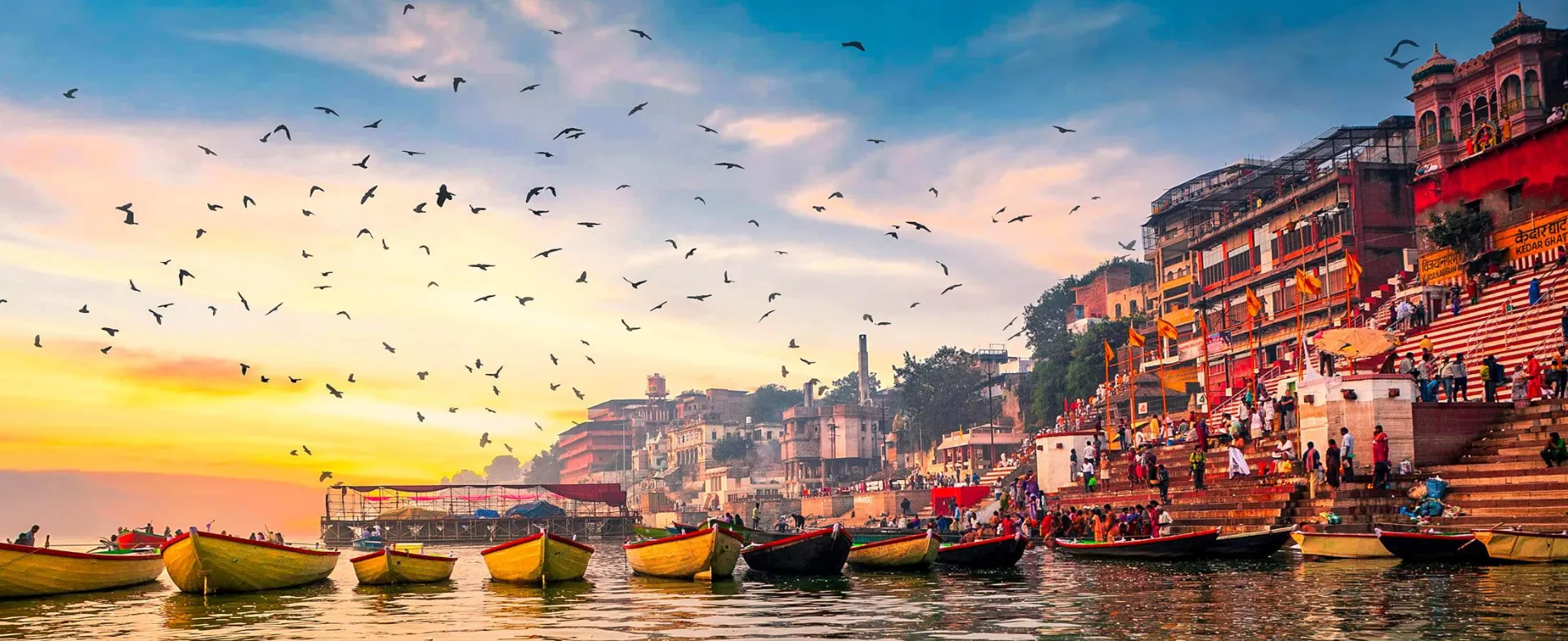
14 days · Rajasthan, Madhya Pradesh & Uttar Pradesh
From the Thar to the Ganga
Desert forts, lake palaces, forgotten temple towns and a river that has never stopped — India's oldest story, in the order it happened.
At a glance
One country, four different worlds
This route crosses northern India from its driest edge to its most sacred river. It begins in the painted merchant towns of Shekhawati, runs west into the Thar Desert, turns south through the lake city of Udaipur, and then east through the Mughal capitals into the temple country of Madhya Pradesh — finishing on the ghats at Varanasi.
What makes it work is the order. Rajasthan is theatre: gold forts, blue cities, camel silhouettes on a dune. Varanasi is the opposite of theatre. Arriving there after twelve days of grandeur means you meet it properly — as something older and stranger than everything that came before.
It is a full fourteen days with real distances involved, and we would rather be straight with you about that than have you find out on day three.
Day by day
The 14-day itinerary
Delhi to Mandawa
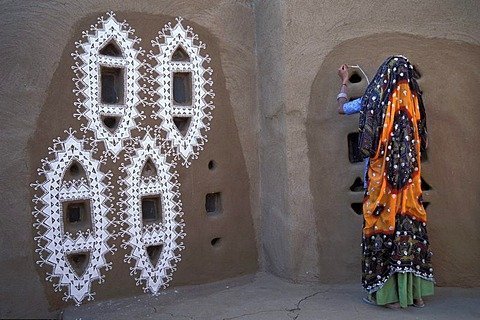
West out of Delhi into Shekhawati, a region of small towns where nineteenth-century trading families competed to cover their houses in frescoes — gods, trains, elephants, early motorcars, all painted across courtyard walls by artisans who had never seen most of them.
Many havelis are half-abandoned and still lived in by caretaker families, which is exactly what makes walking Mandawa in the late afternoon so good. Sunset from a rooftop, then a quiet first night.
Mandawa to Bikaner
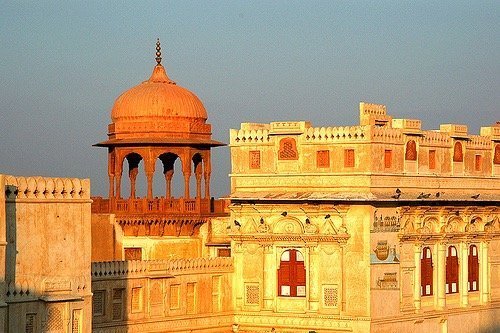
A morning drive onto the desert plain to Bikaner, a caravan city that grew rich on the trade routes crossing the Thar. Junagarh Fort is the reason to stop — unusually, it was never taken, so its interiors survive intact rather than restored.
Inside are lacquered ceilings, a hall lined with gold leaf, and the Prachina Museum's collection of royal textiles and portraits. Late afternoon free to walk the old walled city, which is far less visited than Jaipur's.
Bikaner to the Sam dunes
A stop at Deshnoke, thirty kilometres south, where the Karni Mata temple has been home to thousands of rats for six centuries. Devotees consider them sacred and feed them daily. It is one of the most genuinely unusual places of worship anywhere, and entry is barefoot.
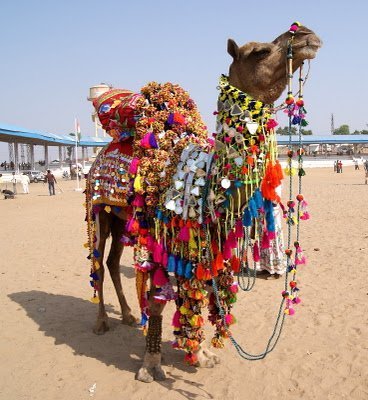
Then a long run west to the Sam dunes and a desert camp. Camels at golden hour, folk musicians after dark, and the kind of sky you only get this far from a city.
Sam to Jaisalmer
Short drive to Jaisalmer, where the fort is not a monument but a functioning neighbourhood — roughly a quarter of the old city still lives inside the walls, which makes it one of the last inhabited forts on earth. The yellow sandstone turns genuinely gold in low sun.
Afternoon among the merchant havelis: Patwon Ki Haveli, Nathmal Ki, Salim Singh Ki, each carved so finely the stone reads like lace. Boats on Gadisar Lake at dusk.
Jaisalmer to Jodhpur
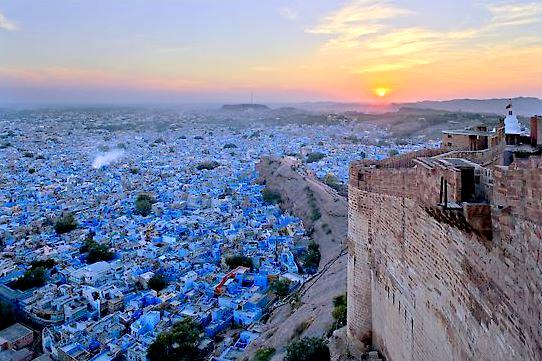
East across the desert to the blue city. Mehrangarh rises straight out of a rock outcrop 120 metres above the streets, and the view from its ramparts — an entire quarter washed in indigo below — is the single best vantage point in Rajasthan.
The fort museum holds palanquins, arms and miniature paintings, all well presented. Umaid Bhawan, part palace and part family home, closes the afternoon.
Jodhpur to Udaipur, via Ranakpur
The Jain temple at Ranakpur is worth the detour on its own — 1,444 marble pillars, no two carved alike, holding up a fifteenth-century ceiling that seems to float. It is quieter than almost any monument of its stature in India.
Then down into the Aravalli hills to Udaipur. Lake Pichola in the last light, from a boat, is the standard introduction and remains a good one.
Udaipur
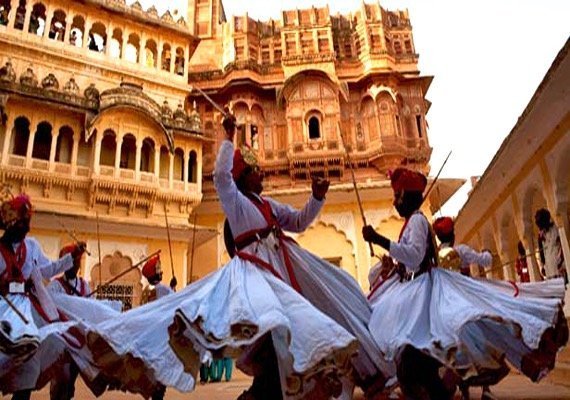
A full day in one place, deliberately. The City Palace is the largest in Rajasthan and still partly a royal residence; go early, before the corridors fill. Jagdish Temple sits just outside, active and loud in the best way.
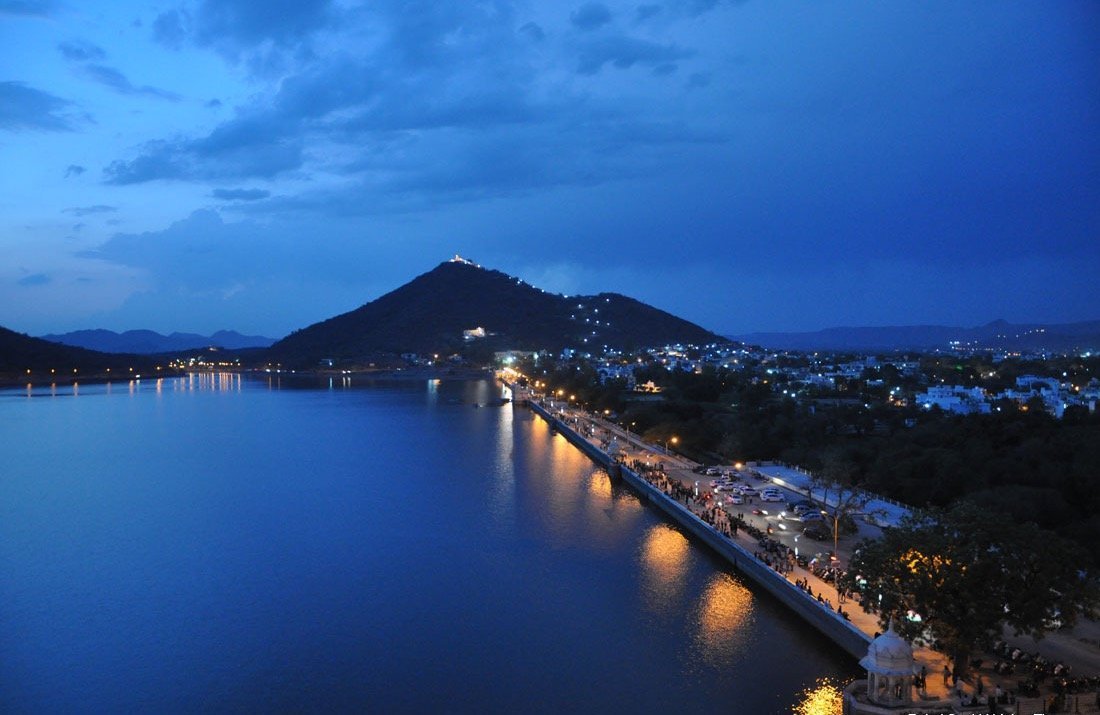
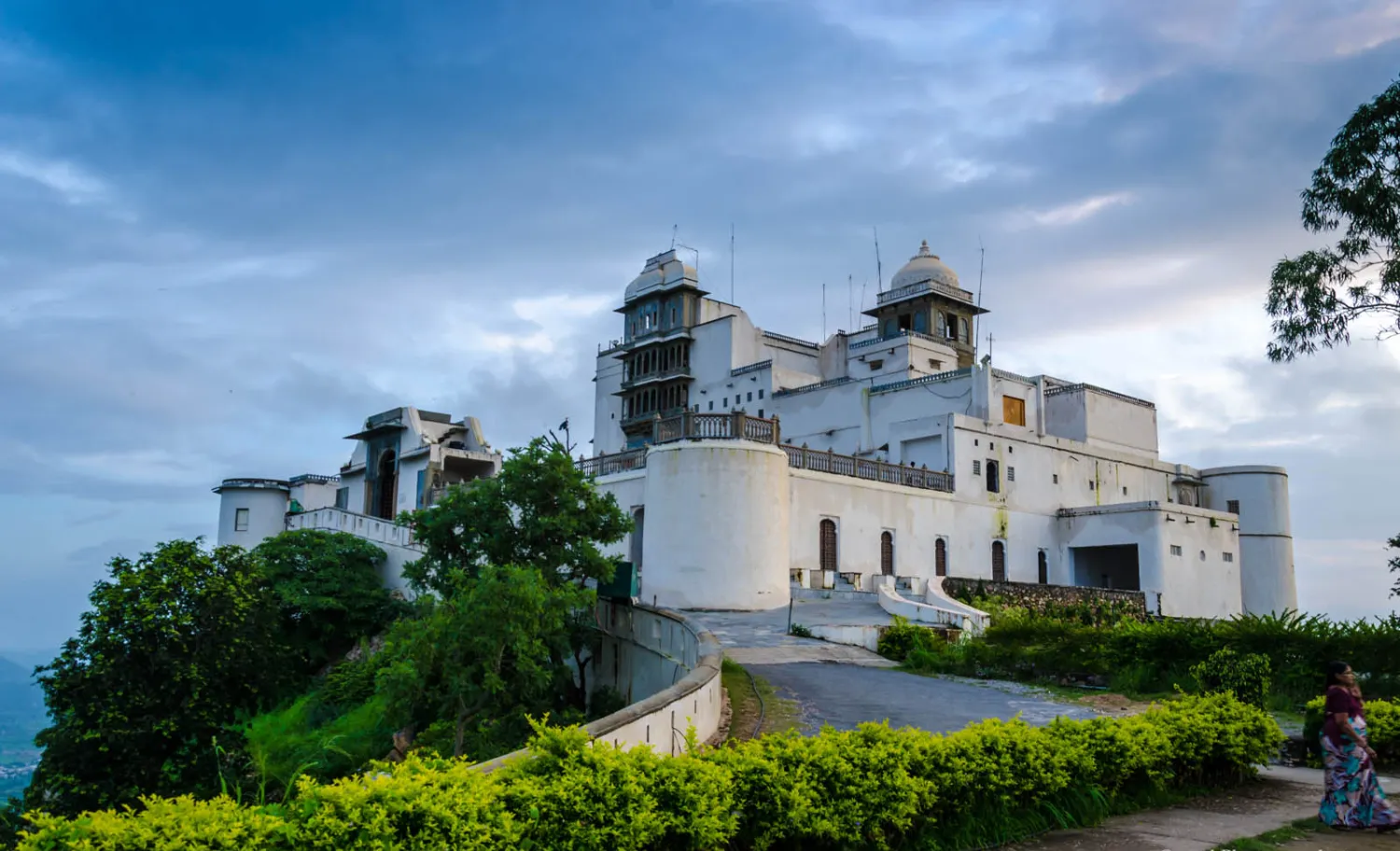
Afternoons here are for Saheliyon Ki Bari's fountains, or the climb to Sajjangarh for the view, or simply sitting by Fateh Sagar and doing nothing at all. After a week of driving, the last option is the one we would recommend.
Udaipur to Jaipur, via Pushkar
North-east to Pushkar, a small temple town wrapped around a lake with fifty-two bathing ghats. Its Brahma temple is one of very few anywhere dedicated to that god, which gives the place a particular significance far out of proportion to its size.
On to Jaipur for the evening. Chokhi Dhani — puppetry, folk dance, a Rajasthani thali eaten sitting on the floor — is unashamedly staged, and also genuinely good fun after a long day in the car.
Jaipur
Amber Fort first thing, before the coaches — the mirrored Sheesh Mahal inside is worth the early alarm on its own. Then Jantar Mantar, an eighteenth-century observatory of vast stone instruments that still keep time to within two seconds.
Hawa Mahal's honeycomb façade was built so royal women could watch the street unseen; the City Palace holds the textile and armoury collections. Afternoon in the bazaars of the old pink quarter, which are better for blue pottery and block print than anything you will find later.
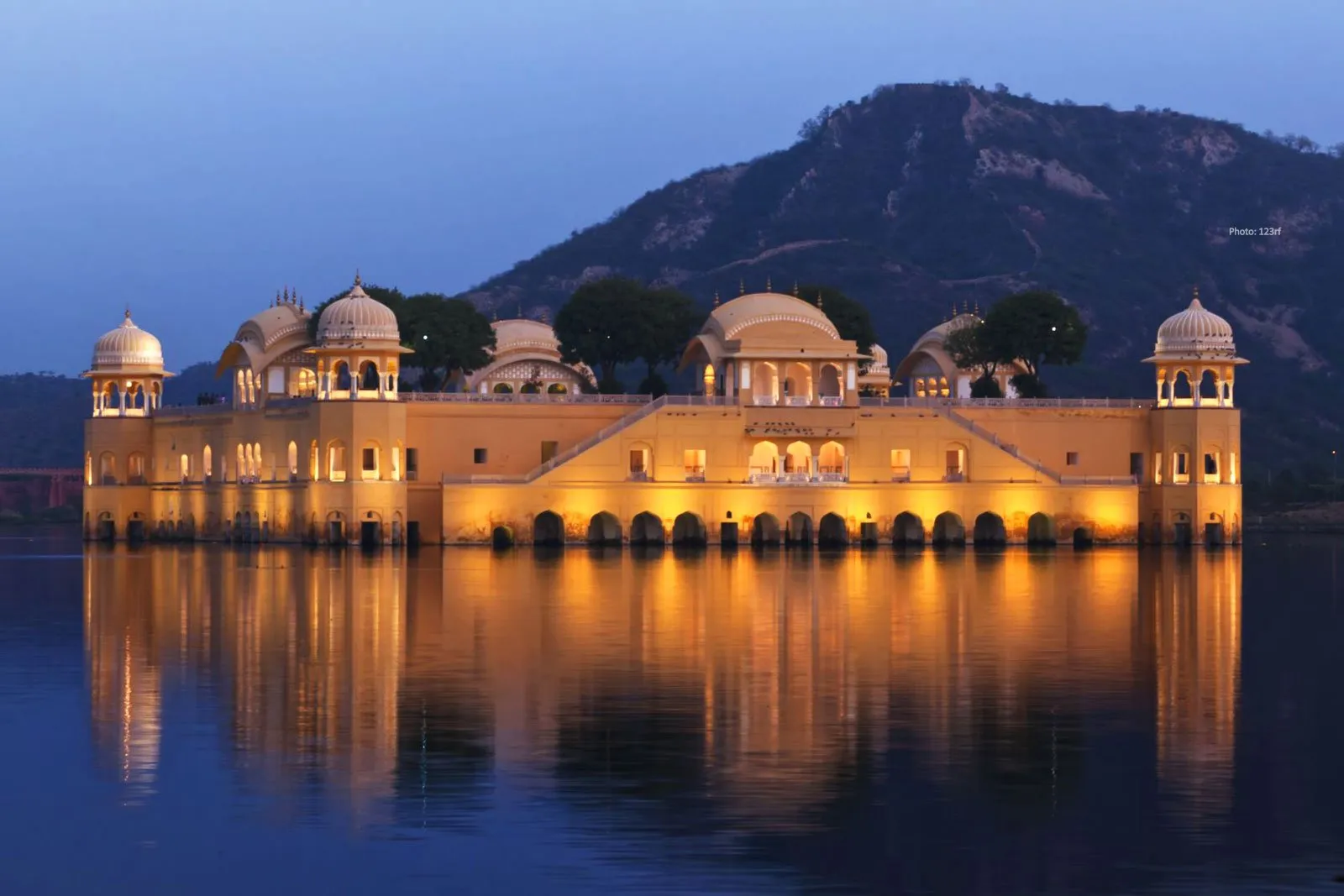
Jaipur to Agra, via Fatehpur Sikri
Akbar's abandoned capital sits halfway. Built in red sandstone, occupied for barely fourteen years, then left because the water ran out — which is why it survives almost perfectly, a complete Mughal city with nobody in it.
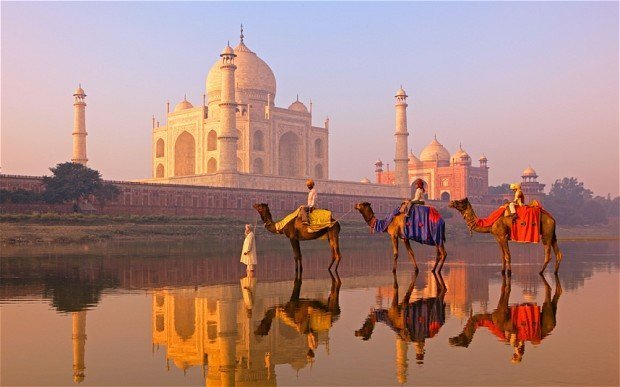
Into Agra for the Taj Mahal in the late afternoon, when the marble takes on colour and the crowds thin. Agra Fort after, looking back at the Taj from the tower where Shah Jahan spent his last years under his son's guard.
Agra to Orchha
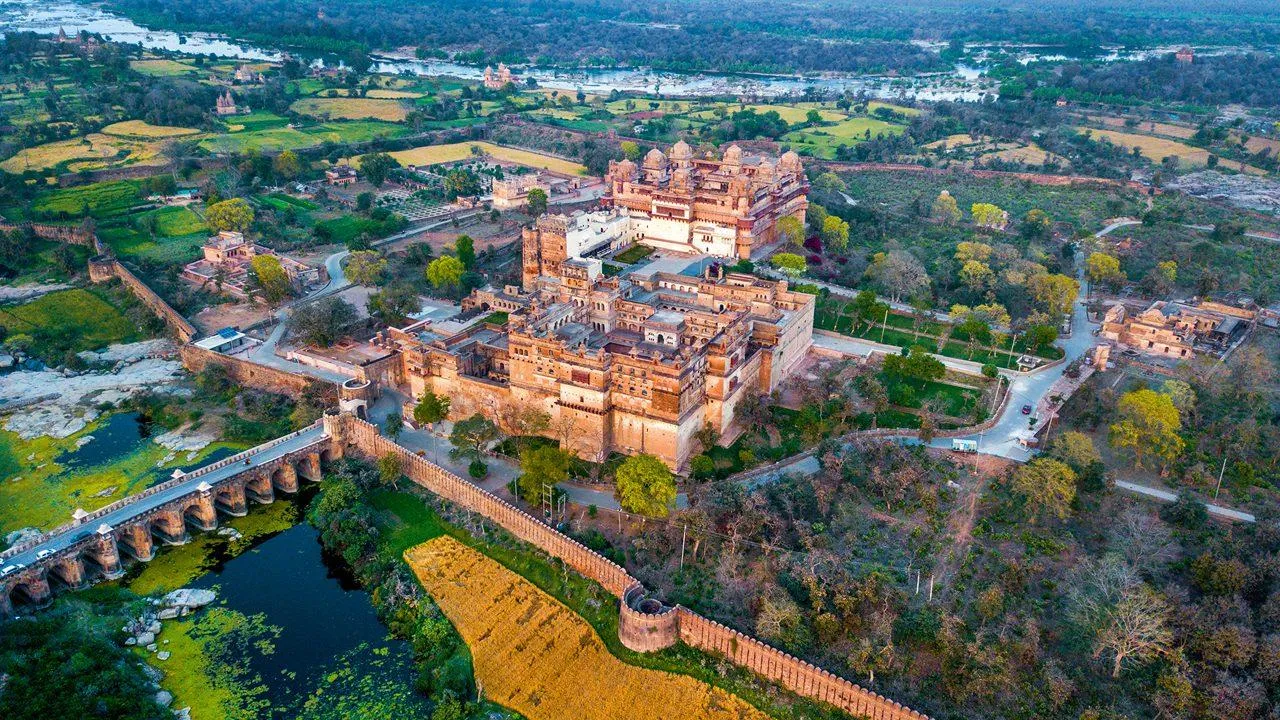
South into Madhya Pradesh to a small town on the Betwa river that was a Bundela capital and then simply stopped mattering. What is left is a set of seventeenth-century palaces standing in open country, with cattle grazing between them and hardly a visitor in sight.
Jahangir Mahal, Raj Mahal and the cenotaphs along the riverbank at sunset. Orchha is the quietest night of the trip and, for many guests, the surprise of it.
Orchha to Khajuraho
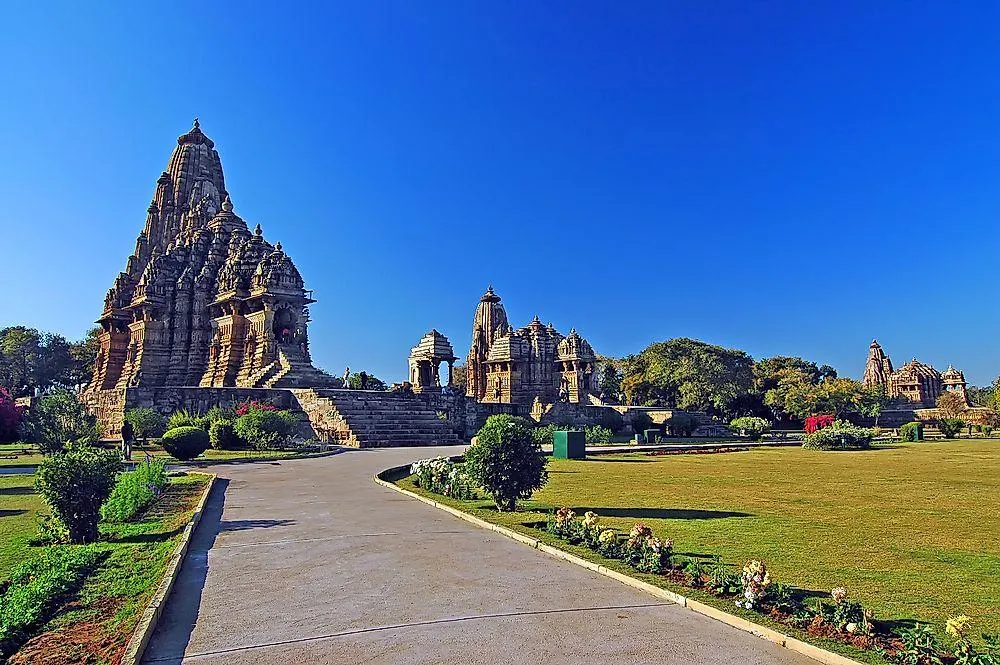
Khajuraho's temples were built between 950 and 1050, lost to the forest for seven hundred years, and rediscovered by a British engineer in 1838. Of roughly eighty-five original structures, twenty-five survive, and they carry some of the finest stone carving in the subcontinent.
They are best known for the erotic sculpture, which in fact accounts for under a tenth of the carving and sits within a far larger programme of gods, musicians, dancers and daily life. Kandariya Mahadev is the masterpiece. A guide makes the difference here between looking and understanding.
Khajuraho to Varanasi
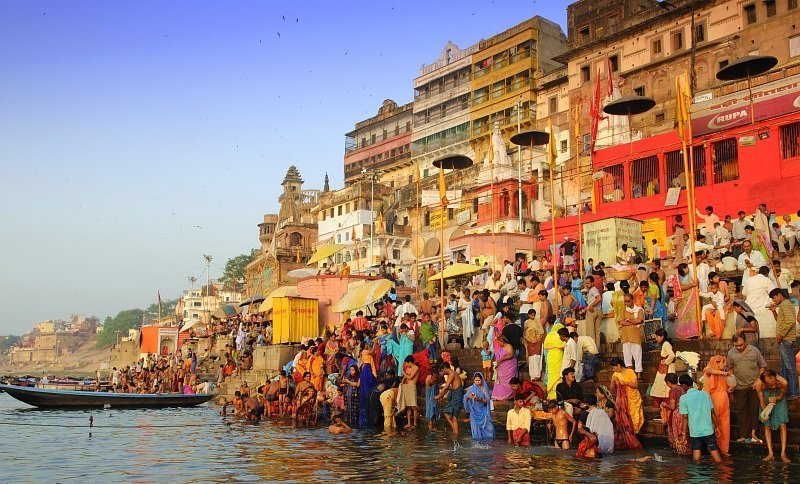
A short flight east to one of the oldest continuously inhabited cities on earth. Varanasi asks nothing of you and explains nothing — weddings pass funerals in the same lane, and the whole city carries on around both.
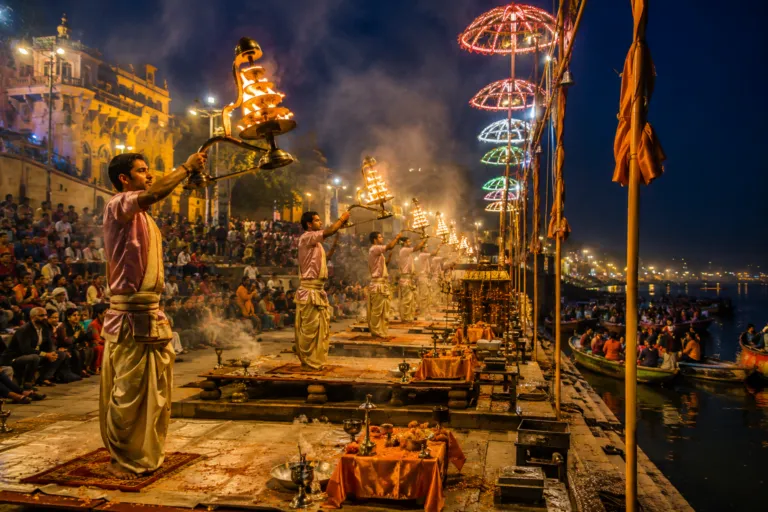
Settle in, then down to Dashashwamedh Ghat for the evening aarti. We watch from a boat pushed off early, so you see the entire ghat lit at once rather than the back of a crowd.
Varanasi, and home
Out before dawn on a rowed boat while the ghats come out of the dark one at a time. It is the reason most people come to Varanasi and it deserves the early start.
Breakfast, then the morning is yours — the silk weavers' workshops behind the old city, the lanes around Vishwanath, or Sarnath ten kilometres out, where the Buddha gave his first teaching. Airport transfer in the afternoon.
Tell us your dates and whether you want the full fourteen days or a slower version of it. We'll shape the route around the answer.